Film a fair side-by-side product comparison
Plan matching tasks, conditions and camera views for two products. Keep failures and limits visible, then write a conclusion the comparison supports.
 EasyLines team7 min read
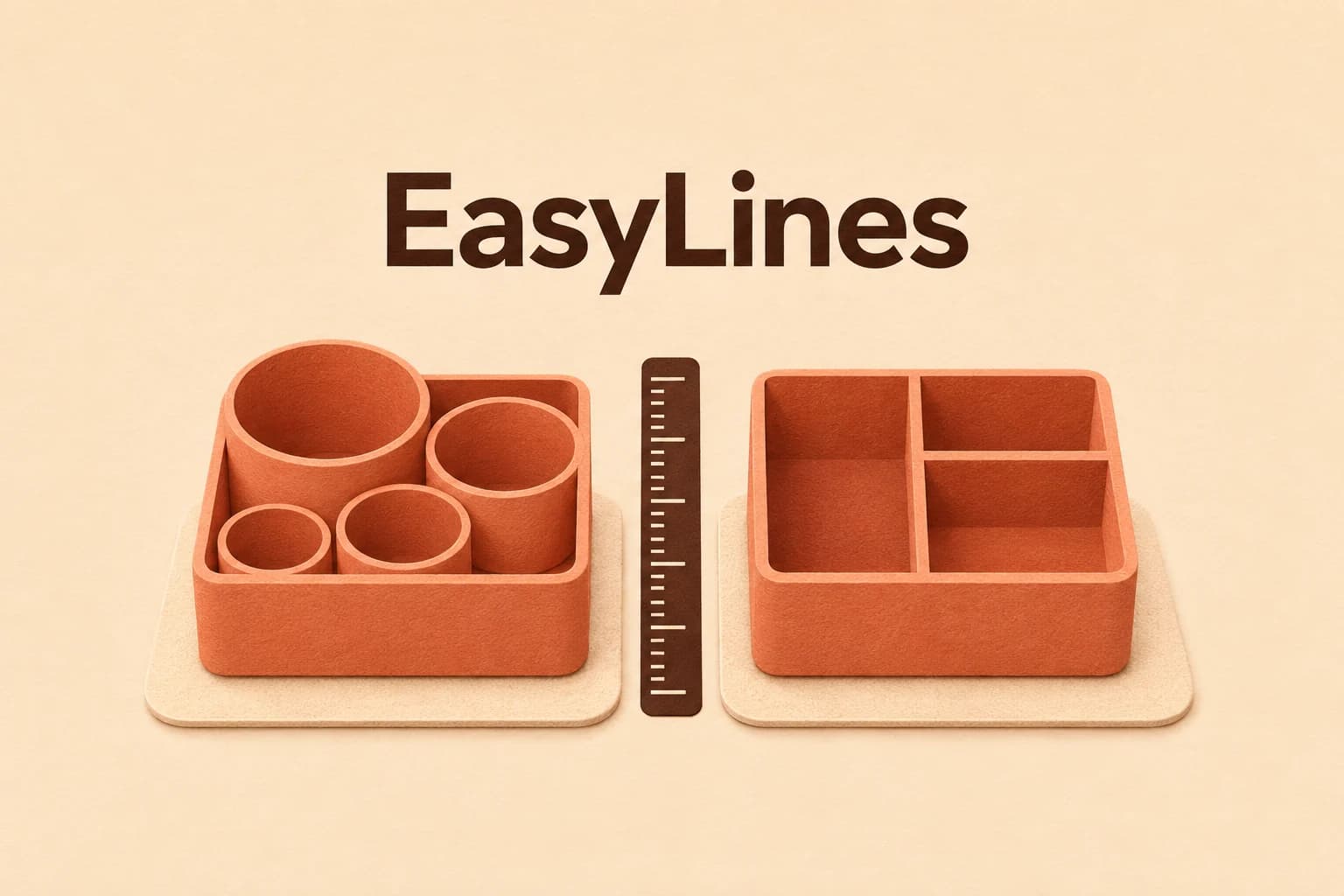
AI-generated editorial illustration.
On this page 8 sections
- 1. What decision can this comparison answer?
- 2. Which product samples should you identify?
- 3. How do you keep the task the same?
- 4. How do you make the camera views fair?
- 5. When should you repeat a recording?
- 6. How do you describe mixed comparison results?
- 7. What comparison notes should the editor receive?
- 8. Frequently asked questions
Film a fair product comparison by choosing one shared task, identifying the exact samples, and deciding the conditions and repeat rules before recording. Give both products an equally informative view. Side-by-side presentation can help people inspect differences, but it does not make mismatched demonstrations comparable. Your conclusion should describe the task you actually showed, including ties, failures and limits.
What decision can this comparison answer?
Replace “Which is best?” with a question a short demonstration can answer. For two pencil cases, ask whether the same named set of writing items fits, closes and can be retrieved in an ordinary way. That is a useful product decision with observable steps. It does not establish which case lasts longer or suits every person. Select the question because it matters to the viewer, rather than because one sample already looks likely to win.
Google’s review guidance recommends evidence of actual experience, relevant comparable options and research-based benefits and drawbacks. Apply that editorial principle by making the basis of your comparison inspectable. This article supplies a proposed recording method, with hypothetical examples rather than tested products. It offers no buying recommendation, endorsement or prediction about how a platform ranks a video.
Which product samples should you identify?
Record what you actually have: variant, visible condition, supplied parts and any setup that affects the task. Keep a recognizable temporary identifier in your notes, such as case A and case B. If one case has removable dividers, decide whether the ordinary intended configuration includes them. Explain that choice. Fairness does not require removing a useful design feature merely to make the products look identical.
It does require acknowledging a difference that changes what you are asking. A compact case and a much larger organizer can be compared for a shared packing task, but not presented as equal-size alternatives without qualification. Consult the UGC client-brief guide when the assignment has a required claim or product variant. A request for a favorable result is not evidence that the samples will produce it.
How do you keep the task the same?
For the hypothetical cases, choose five specific items: a capped pen, a pencil, an eraser, a short ruler and a marker. The same physical items move between cases. Begin with each case empty and fully open. Load in the same stated order, attempt a normal closure, then reopen and retrieve the marker. Use only gentle ordinary handling; do not force a closure to manufacture a success or failure.
Keep the surface and orientation consistent where those affect access. If a flexible case needs support, describe how you support each sample and why. Practice the sequence before the comparison recording so unfamiliarity does not become one product’s disadvantage. Record any unavoidable difference, such as a flap that must fold before closing. A shared task can contain product-specific steps, provided both get their normal usable procedure.
How do you make the camera views fair?
Begin with both cases visible together where practical. Keep the useful product faces at similar distances from the camera, then use matching individual views for the action. A close enlarged view of A and a distant view of B can imply a size difference that belongs to the filming arrangement. If you assemble a split screen in a separate editor, preserve meaningful relative scale or clearly identify independently framed detail views.
Use equivalent coverage: opening state, loading action, closure and retrieval. Match what the viewer can inspect rather than insisting on identical clip length. One case may genuinely need an additional normal step. Leave that step visible. A polished cut that removes it from only one product changes the apparent task. Show ordinary hand movement and the complete relevant result, rather than presenting a still of the most flattering instant for each sample.
When should you repeat a recording?
Distinguish a recording fault from a product outcome. A bumped camera hiding closure may invalidate the footage. A case failing to close with the chosen items is potentially the result. Write those rules before recording. Otherwise it becomes tempting to retry one unfavorable outcome repeatedly while accepting the other sample’s first success. Retain a note of planned attempts and the reason for any replacement.
For a small illustrative comparison, you can choose a limited planned set of runs and reverse which sample goes first on the next run. That is an authored planning option, not a statistical protocol or proof that learning and order effects disappear. Keep every valid result in your record. If familiarity noticeably changes your handling, explain it or redesign the demonstration instead of selecting whichever pair of attempts tells the preferred story.
How do you describe mixed comparison results?
Imagine these invented observations: both cases close with the five items; A keeps the marker visible when opened; B requires moving the ruler to retrieve it. Those possible results support describing this particular access difference. They do not establish that A is faster unless you actually measure a defined timed task, nor that B is inferior for someone who values another feature. Do not turn a visible extra movement into a universal performance claim.
A proposed summary is: “Both cases held this same set and closed in these demonstrations. In A, the marker stayed accessible at the top. In B, I moved the ruler before removing it. I have not compared wear or other loads.” Use such words only if your recordings establish them. If the actual results conflict across runs, keep that inconsistency and investigate the condition instead of announcing a clean winner.
| Check | Case A | Case B |
|---|---|---|
| Samples | Unbranded case A | Unbranded case B |
| Load | Same capped pen, pencil, eraser, short ruler and marker | Same capped pen, pencil, eraser, short ruler and marker |
| Starting condition | Empty and fully open | Empty and fully open |
| Closure | Closes with the five items | Closes with the five items |
| Marker access | Marker visible when opened | Ruler moved before marker retrieval |
| Conclusion limit | Access shown in this attempt; speed and durability unmeasured | Access shown in this attempt; speed and durability unmeasured |
Proposed comparison record, not test results: Question: same set, complete closure, marker access. Shared conditions: identical five items, empty start, loading order, surface. Valid outcome: product cannot complete task under these conditions. Recording fault: decisive action hidden by camera movement. Conclusion field: fill only after reviewing every planned valid run.
What comparison notes should the editor receive?
Use the UGC shot list to request any missing equivalent view. Leave the editor the task, sample identifiers, valid runs, recording faults and exact conclusion. Note which actions must remain visible. If you shorten one sequence, inspect whether the final pairing still communicates the same start, effort and finish for both products. Music, reaction shots and unequal magnification should not carry an unsupported verdict.
Keep source notes for any specifications you mention and date changing details before release. You can omit prices and availability when they do not help this question. EasyLines is preparing to launch as a teleprompter and recorder; join the waitlist for launch updates if preparing a clear comparison explanation fits your workflow. Test design, side-by-side assembly and evidence review happen in your own production process.
Frequently asked questions
Must both products be identical sizes?
No. Identify relevant differences and choose a shared task that makes sense for both. Do not imply equal dimensions when they differ.
Can I retake an unsuccessful attempt?
Separate a genuine recording fault from a valid product outcome using rules chosen before filming. Keep valid unfavorable results.
Is split screen necessary?
No. Clear matching sequential demonstrations can be useful. A layout cannot compensate for mismatched conditions.
Should I name an overall winner?
Only when your evidence and scope justify that conclusion. A conditional difference or unresolved tie can be more accurate.
Can one demonstration prove durability?
A brief packing demonstration does not establish long-term wear. Leave that question untested unless you have appropriate separate evidence.
Sources and further checks
Coming to iPhone and iPad
Put your next script on EasyLines.
A little help with the words. More room to be yourself. Join the waitlist and we’ll email you at launch.