Mark emphasis in a script without sounding forced
Use a meaning-first emphasis pass for spoken scripts: mark the important contrast, rehearse one delivery choice and check the recording for clarity.
 EasyLines team6 min read
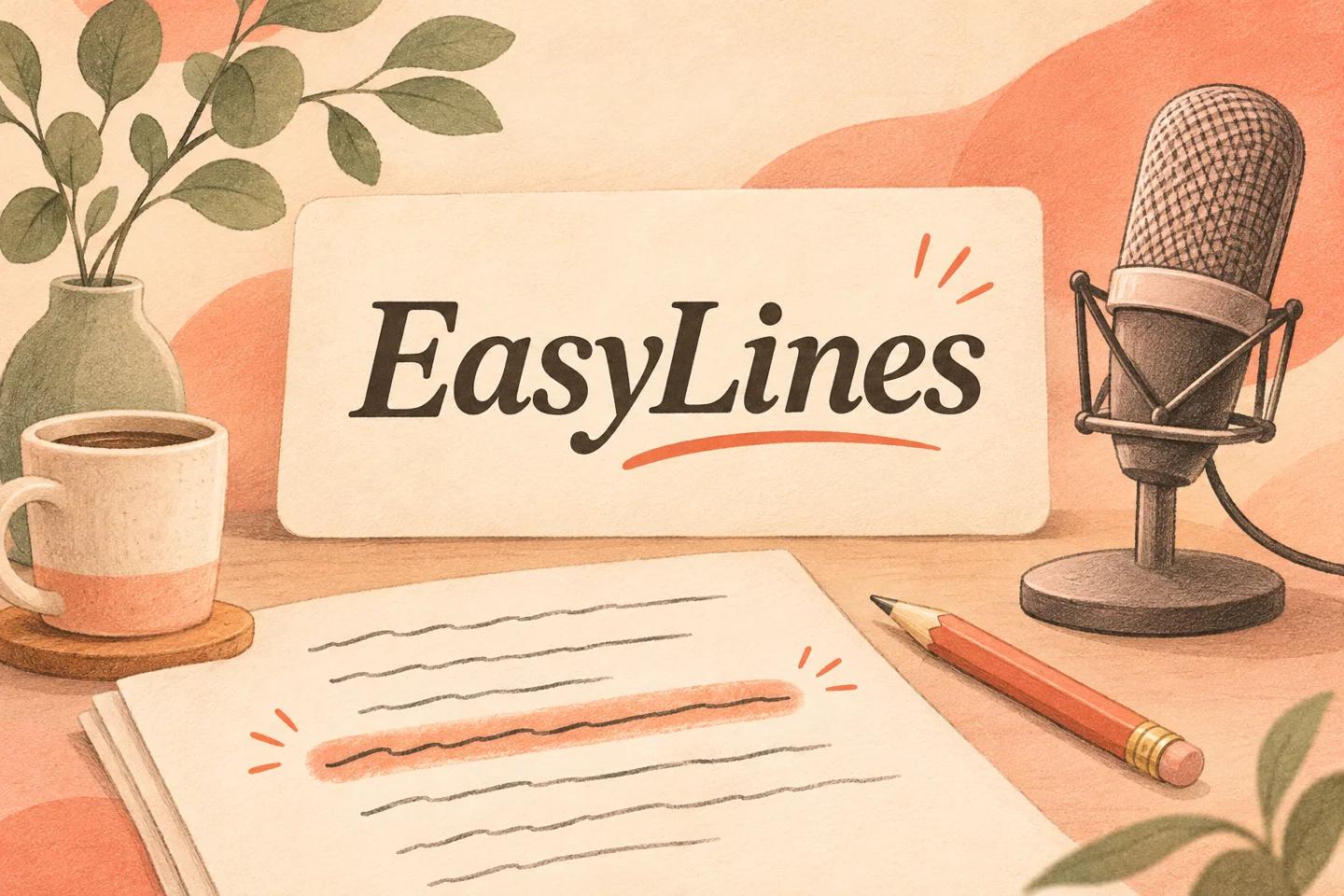
AI-generated editorial illustration.
On this page 8 sections
- 1. What meaning should the listener hear?
- 2. Which annotation system stays readable?
- 3. How can you emphasize without getting louder?
- 4. What does a complete emphasis pass look like?
- 5. When should you rewrite instead of annotate?
- 6. How do you check the listener’s understanding?
- 7. What should the final reading copy preserve?
- 8. Frequently asked questions
To mark emphasis in a video script, identify the word or phrase that changes the listener’s understanding, then give it one simple delivery cue. Try a pause, a slightly slower phrase or a natural stress before increasing volume. Keep most of the script unmarked so the important contrast remains easy to notice.
What meaning should the listener hear?
Mark emphasis only after you know what the sentence is doing. Ask which misunderstanding the line prevents or which choice it explains. In “Return the empty folder to the top tray,” the useful stress depends on the situation. If people choose the wrong tray, “top” matters. If they return unfinished work, “empty” matters. Stressing both equally may blur the point rather than making the instruction clearer.
Write the intended meaning in a margin note before marking the spoken line. This is an original editing exercise, not a rule that every sentence needs a single emphasized word. Some lines work naturally without annotation. If you cannot explain why a phrase deserves attention, leave it unmarked and read it aloud. The listener needs a coherent thought, not a visible record of every decision the writer considered.
Which annotation system stays readable?
Use the smallest system the presenter understands. One underline can mean a meaningful stress, while a blank line can signal a thought boundary. Agree those meanings before handing off the script. Avoid filling a passage with capitals, slashes, brackets and several colors whose meanings require a separate lesson. A performer trying to decode the notation may lose the idea they are meant to explain.
Keep production directions out of the words the presenter should say. If a cue cannot be shown reliably in the chosen prompter, preserve it in a rehearsal copy and use a clean reading version for recording. The teleprompter formatting guide covers the visual reading layer. Emphasis is the meaning layer: clear typography helps you see the line, but it does not choose what the line should communicate.
How can you emphasize without getting louder?
Try a pause before a key contrast, a slightly slower phrase or an ordinary change in stress. Record each as a separate short option and listen for meaning. Do not assume a louder word is automatically more useful. An urgent delivery may be appropriate in one script and distracting in another. Keep the speaking style consistent with the relationship you want with the viewer.
Use this hypothetical line: “Use the clean copy, then archive the draft.” First read it evenly. Next allow a short natural separation before “then.” Finally try stressing “clean copy.” Ask which version makes the sequence easiest to follow without sounding theatrical. These are rehearsal alternatives, not measured performance outcomes. Choose the smallest change that makes the intended instruction clear, and remove an annotation if the natural read already does the work.
What does a complete emphasis pass look like?
Work on one paragraph rather than the whole script at once. Read it aloud without marks, state its main point and identify the phrase that carries that point. Add one cue and record the paragraph again. Listen without watching the page. If the cue changes the meaning in an unintended way, change the wording or remove the cue before adding another layer of performance instructions.
For a fictional desk-organizing video, the paragraph could explain that reference notebooks stay on a shelf while today’s notebook goes in a bag. Mark the two destinations only if the contrast is otherwise unclear. Do not emphasize the notebook colors unless color identifies the categories. This keeps delivery attached to the explanation. A vivid but irrelevant stress can make the sentence sound energetic while drawing attention away from the useful relationship.
When should you rewrite instead of annotate?
Rewrite when the sentence needs several cues just to remain understandable. A long chain of conditions may be difficult to deliver even with careful stress. Separate the instruction from the exception, name the object and put the action in a direct sentence. Then read the revised passage with fewer marks. The script should carry the meaning before performance adds nuance.
Compare this invented pair: “In circumstances where the folder is not the active copy, it should, following review, be placed in the upper location.” A clearer spoken version is “After review, put reference folders in the top tray. Keep today’s folder on your desk.” The second version still needs context, but its contrast is easier to hear. Use the short video script guide to simplify the passage before asking the presenter to rescue it with delivery.
How do you check the listener’s understanding?
Ask someone to describe the instruction after hearing the paragraph once. Do not first explain which word you emphasized or what answer you hope to receive. If they identify the wrong object or sequence, inspect wording and delivery together. A correct answer from one listener is useful feedback about that read; it does not establish that every audience will understand or remember the passage.
W3C media planning guidance recommends considering accessibility during preparation. For this exercise, also make the words understandable in a plain transcript rather than relying entirely on vocal stress. A contrast that disappears when read silently may need explicit wording. Keep emphasis as help for the spoken performance, while ensuring the underlying explanation names what matters and any essential difference is available in the text itself.
What should the final reading copy preserve?
Keep only cues that survived rehearsal and make their meaning clear to the actual presenter. If a different person takes over, let them read the paragraph naturally before inheriting every old mark. Their useful stress may fall elsewhere without changing the meaning. Save the accepted reading copy with the recorded take so later pickups can match the intended instruction rather than an obsolete annotation experiment.
End the pass by checking three things: the important contrast is explicit in the words, the delivery supports that contrast and the page remains easy to read. If one fails, fix that layer directly. Do not turn every sentence into a performance event. A quiet explanatory line can prepare the listener for the moment that matters more, and the script should leave the presenter enough room to speak like a person.
Use the listener comprehension exercise if the intended contrast remains unclear.
EasyLines is preparing to launch. It focuses on reading a script and recording your delivery, with adjustable text and pace. Finishing work belongs in your chosen editor. If that upcoming workflow fits your needs, join the EasyLines waitlist; availability will be confirmed at launch.
Frequently asked questions
Should I capitalize every important word?
Use a small agreed system instead. Too many capitalized words make it difficult to identify the intended contrast.
Can a pause replace louder speech?
Often it is worth trying. Record both approaches and choose the one that makes the thought clearer for this passage.
Should stage directions be read aloud?
Keep directions separate from spoken text and agree how the presenter will use them during rehearsal.
What if emphasis changes the meaning?
Rewrite or remove the cue. Check the plain text and ask a listener what they understood.
Sources and further checks
Coming to iPhone and iPad
Put your next script on EasyLines.
A little help with the words. More room to be yourself. Join the waitlist and we’ll email you at launch.